


Barrel pumps are widely used in Indian industries for transferring liquids from drums and containers. They are simple to operate and flexible in use, but in real plant conditions, users often face recurring problems that affect performance, safety, and pump life.
Most of these issues do not come from poor pump quality. They usually arise due to incorrect selection, improper installation, or mismatch between the pump and the application.
Below are the most common barrel pump problems seen across industrial environments and why they occur.
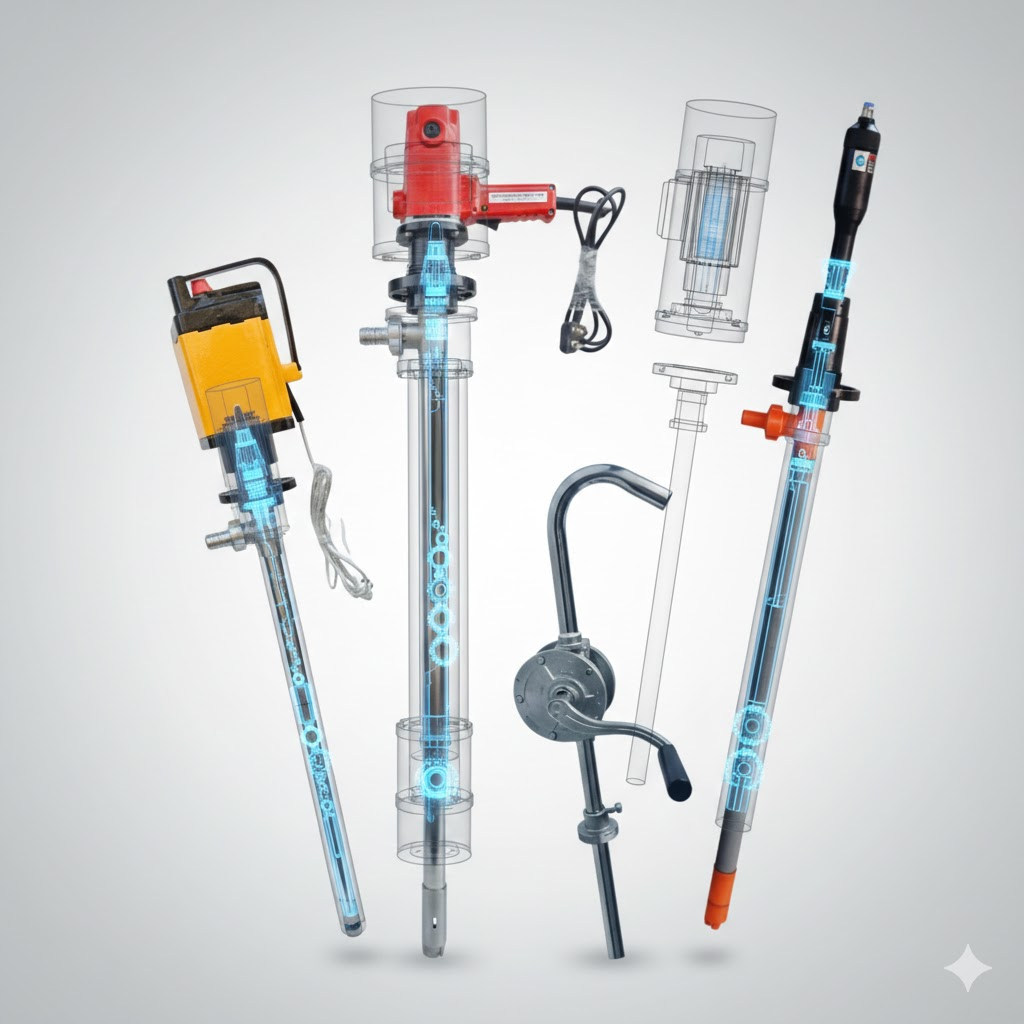
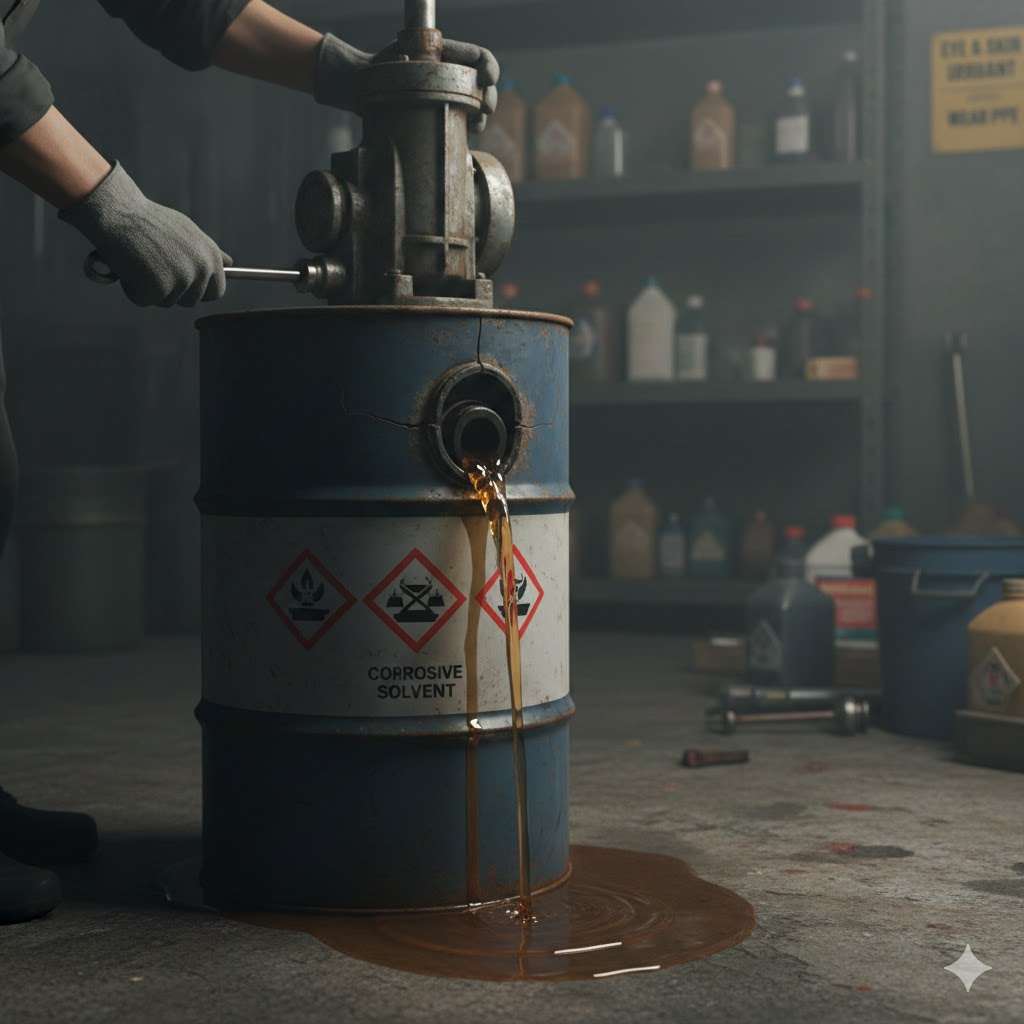
Leakage is one of the most frequently reported problems with barrel pumps. This often happens due to improper sealing, worn-out components, or incorrect assembly.
In many cases, leakage occurs when the pump is used with aggressive chemicals or solvents without compatible materials. Over time, seals and diaphragms degrade, leading to visible leaks and safety risks.
Regular inspection and correct material selection are essential to reduce this issue.
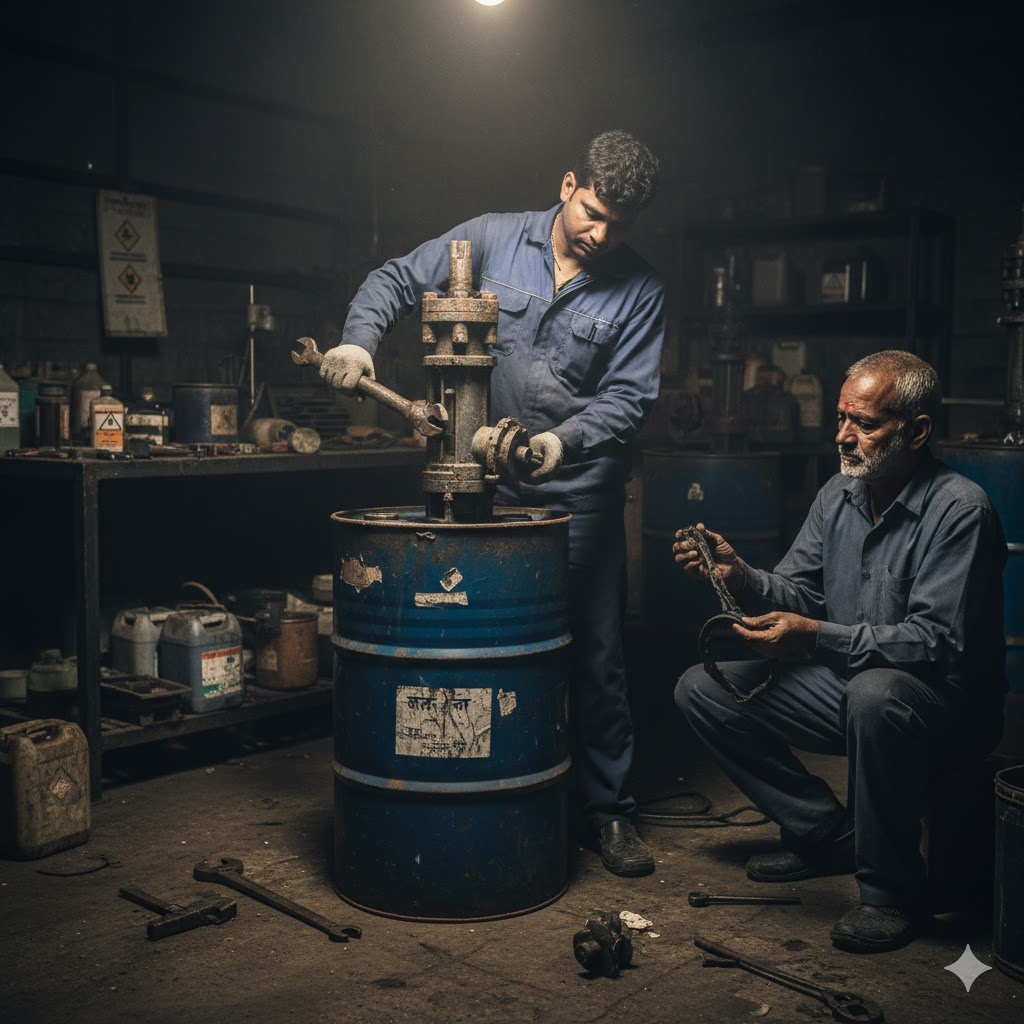
Another common problem is the pump failing to prime or losing suction during operation. This is usually linked to air ingress, loose connections, or incorrect immersion depth inside the barrel.
If the suction tube is not fully submerged or if air enters through joints, the pump struggles to create the required vacuum. This results in irregular flow or complete stoppage.
Ensuring tight connections and correct positioning inside the drum helps avoid priming issues.
Many users notice that the barrel pump delivers less flow than expected. This is often caused by using the wrong pump type for the fluid being transferred.
High-viscosity fluids, thick oils, adhesives, or slurries require pumps designed for heavier loads. Using a basic barrel pump for such fluids leads to poor performance and increased wear.
Flow reduction can also occur due to clogged suction tubes or blocked discharge lines.
Barrel pumps operating with abrasive or corrosive fluids tend to experience faster wear if the pump materials are not suitable for the application.
In Indian plants, pumps are often used across multiple fluids without considering compatibility. This practice increases maintenance frequency and shortens pump life.
Selecting the right pump material and limiting cross-fluid usage can significantly reduce wear-related issues.
When barrel pumps are used for flammable or hazardous liquids, safety becomes a major concern. Electric pumps used in unsafe environments or improper grounding can create serious risks.
Pneumatic or air-operated barrel pumps are generally safer in such conditions, but incorrect installation or lack of operator awareness can still lead to accidents.
Following safety guidelines and using the correct pump type for hazardous applications is critical.
Unusual noise or vibration is often a sign of incorrect operation. This may occur due to misalignment, excessive pressure, or running the pump dry.
Ignoring these signs can lead to internal damage and sudden failure. In many cases, operators continue using the pump despite early warning signs, which increases downtime later.
Monitoring pump behavior during operation helps identify problems early.
Leakage is one of the most frequently reported problems with barrel pumps. This often happens due to improper sealing, worn-out components, or incorrect assembly.
In many cases, leakage occurs when the pump is used with aggressive chemicals or solvents without compatible materials. Over time, seals and diaphragms degrade, leading to visible leaks and safety risks.
Regular inspection and correct material selection are essential to reduce this issue.
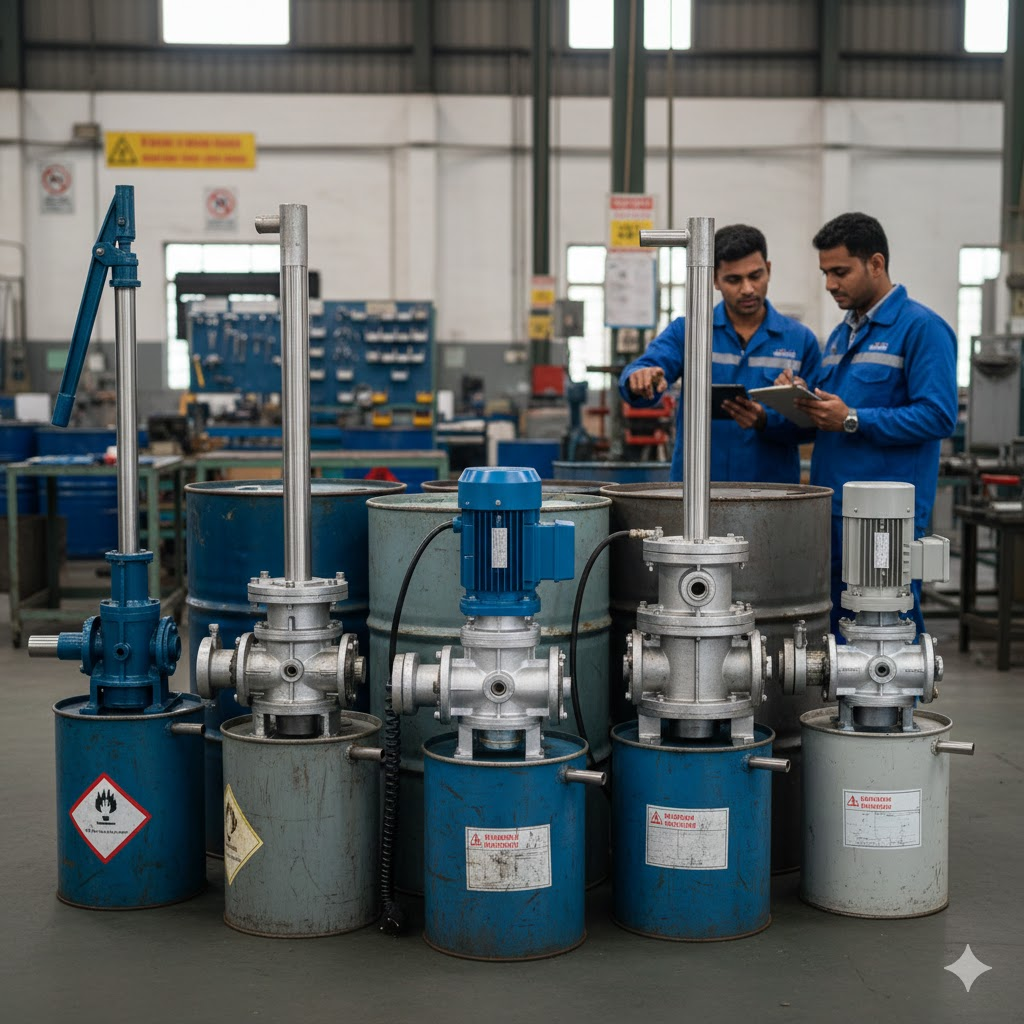
Most barrel pump problems are preventable. They usually result from incorrect pump selection, unsuitable materials, poor installation, or lack of basic maintenance practices.
Understanding the application, fluid properties, and operating conditions plays a much bigger role than simply choosing a pump based on cost or availability.
By addressing these common issues early, Indian industries can achieve safer operation, better pump performance, and longer equipment life.